Fit at Home Explained: Strength Training Without a Gym
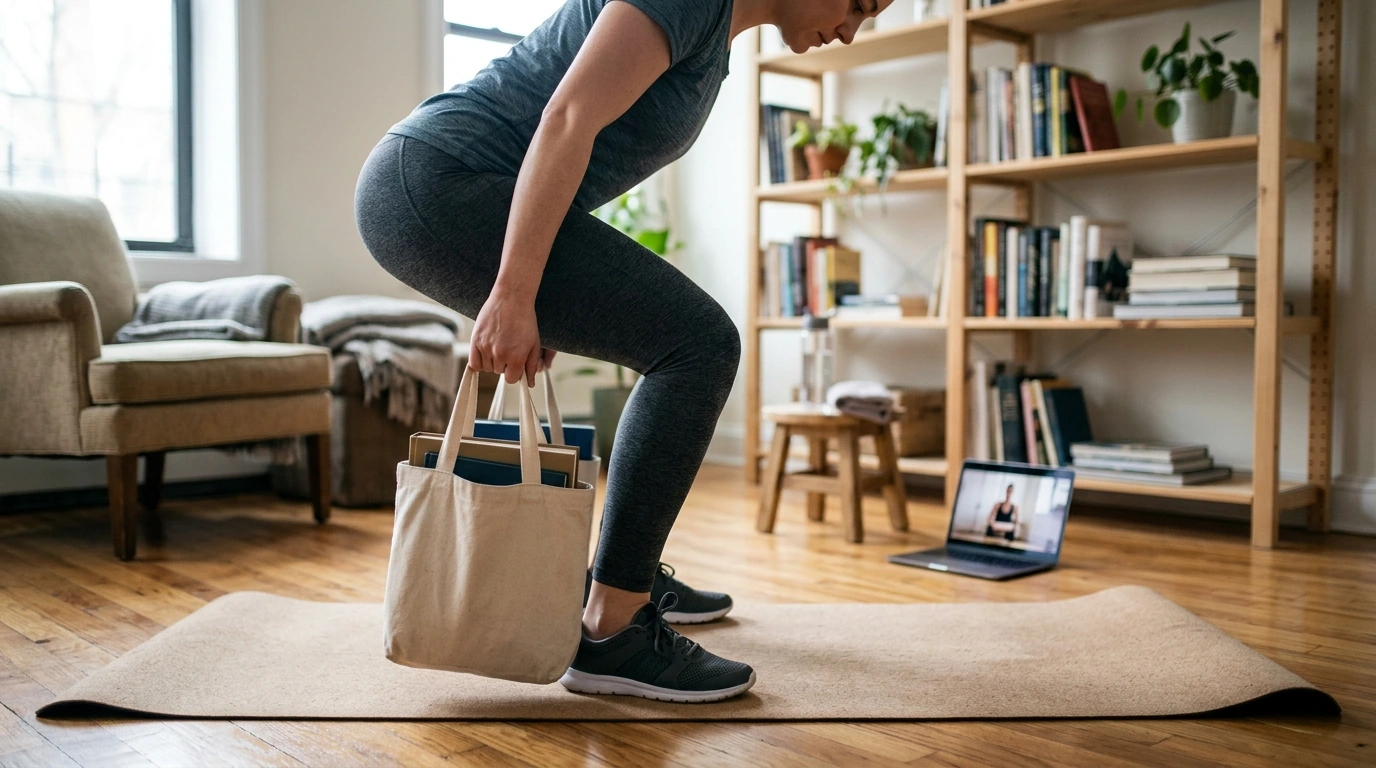
What is Fit at Home?
Fit at home is a simple, repeatable way to build strength, improve conditioning, and support everyday mobility using your own space instead of a gym. It’s less about having fancy machines and more about having a plan you can follow consistently—whether you train in a living room, garage, spare bedroom, or a corner of your apartment. Our team uses “fit at home” to describe workouts that are practical, scalable, and built around movements you can do safely with minimal setup.
How Fit at Home Works
A fit-at-home routine combines three essentials: smart exercise selection, progressive challenge, and recovery. Most plans center on foundational patterns—squat, hinge, push, pull, carry, and core stability—because those translate directly to real-life strength and posture. You can adjust difficulty by changing tempo (slower reps), range of motion, leverage (incline/decline), or resistance (bands, dumbbells, a kettlebell).
Minimal equipment, maximum consistency
You don’t need a full home gym to start. A mat, a pair of adjustable dumbbells or resistance bands, and a stable chair or bench can cover most training needs. The bigger factor is removing friction: keep your gear accessible, pick a workout duration you can realistically repeat, and schedule sessions like appointments.
What Fit at Home Includes (and What It Doesn’t)
Fit at home should include a warm-up, a main strength or conditioning block, and a quick cooldown for breathing and mobility. It doesn’t require daily max-effort training. Better results usually come from 3–5 sessions per week with at least one lighter day, plus walking or gentle cardio to support recovery.
Safety and form priorities
Choose exercises you can control without pain, keep reps smooth, and stop 1–3 reps before form breaks down. Use stable surfaces, clear your training area, and progress one variable at a time (more reps or more resistance, not both at once).
Get a Structured Plan
If you want a ready-to-follow schedule, our team put together a simple program you can run immediately: 4-week at-home workout plan with minimal equipment. It’s designed to make progression straightforward while keeping workouts realistic for busy weeks.
FAQ
How often should I work out at home to see results?
Most people see steady progress with 3–5 workouts per week, especially when sessions include full-body strength work. Keep at least one easier day each week to help your joints and muscles recover.












Leave a comment